

M-F 9:30am-5:30pm
Sanjay Kumar
February 2, 2024
When searching for a sperm donor, you may notice that some donors are listed as CMV-positive while others are CMV-negative. If you’re unfamiliar with cytomegalovirus (CMV), seeing a positive result can initially seem concerning.
However, a CMV-positive sperm donor is not necessarily someone with an active infection. In most donor catalogs, a CMV-positive designation refers to antibodies indicating previous exposure to this common virus.
At Cryobank America, many of our qualified sperm donors are CMV-positive because past exposure is common among healthy adults. We also offer CMV-negative sperm donors for recipients who prefer or require that option.
So, is it safe to use a CMV-positive sperm donor? The answer depends on the donor’s screening results, your own CMV status, and your fertility clinic’s recommendations.
Understanding what CMV-positive actually means can help you make an informed decision without unnecessarily eliminating qualified sperm donors from your search.
What Does CMV Positive Mean in a Sperm Donor?
CMV stands for cytomegalovirus, a common virus belonging to the herpesvirus family.
According to the Centers for Disease Control and Prevention (CDC), more than half of adults in the United States have been infected with CMV by age 40.
Most healthy people who acquire CMV experience no symptoms or only mild illness.
Once infected, the virus remains in the body for life and can become dormant. As a result, antibodies from a previous infection may remain detectable long after the initial exposure.
For sperm donors, a CMV-positive designation usually means testing detected CMV IgG antibodies, indicating past exposure.
A positive CMV IgG result alone does not establish that the donor has a current or recent infection.
This distinction matters when reviewing sperm donor profiles.
How Common Are CMV-Positive Sperm Donors?
CMV-positive sperm donors are common because CMV exposure is widespread throughout the general population.
The CDC reports that:
- Nearly one in three children in the United States has been infected with CMV by age five.
- More than half of adults have been infected by age 40.
- Most infected individuals never experience noticeable symptoms.
These statistics help explain why CMV-positive results are frequently encountered during sperm donor screening.
At Cryobank America, many of our available donors have tested positive for CMV antibodies, indicating past exposure. We also have CMV-negative donors.
Being CMV-positive does not automatically disqualify an otherwise healthy sperm donor.
A donor’s eligibility depends on the complete screening results and applicable donor qualification procedures.
Understanding CMV IgG vs. IgM in Sperm Donor Screening
CMV antibody testing helps distinguish previous exposure from findings that may suggest a more recent infection.
Two important antibodies are immunoglobulin G (IgG) and immunoglobulin M (IgM).
| Test result | What it generally means |
| CMV IgG negative, IgM negative | No detectable CMV antibodies at the time of testing |
| CMV IgG positive, IgM negative | Usually indicates past CMV exposure without IgM evidence suggesting recent infection |
| CMV IgM positive | May indicate recent infection, reactivation, or another cause of IgM positivity; further evaluation is necessary |
| Equivocal or inconclusive | Requires interpretation and potentially additional testing |
CMV IgG Positive: Previous Exposure
A positive IgG result generally indicates that an individual has been infected with CMV at some point in their life.
This is common among healthy adults.
When a donor is IgG-positive but IgM-negative, the findings generally suggest previous exposure rather than a recent primary infection.
However, antibody testing alone cannot guarantee CMV is absent or that the patient isn't shedding it.
CMV IgM Positive: Additional Evaluation Needed
A positive IgM result can indicate a recent infection, but IgM testing does not definitively indicate active infection.
IgM antibodies can sometimes persist or appear with reactivation.
For this reason, an IgM-positive result requires appropriate evaluation and may affect donor eligibility.
At Cryobank America, we do not approve donors for release when results suggest recent infection or when they fail our CMV eligibility criteria.
Are CMV-Positive Sperm Donors Safe?
CMV-positive sperm donors can be eligible for donation when their screening results satisfy the sperm bank’s medical and regulatory requirements.
A past CMV infection, by itself, does not mean that a donor is unhealthy or unsuitable.
The FDA recognizes that a reactive CMV antibody test does not necessarily make a tissue donor ineligible.
However, CMV-positive does not mean zero risk, and the potential for CMV transmission through donor sperm cannot be ruled out simply because a donor has a history of past infection.
Prospective parents should consider both donor and recipient CMV status, along with the fertility clinic’s policies.
A CMV-positive donor may be an acceptable option for some recipients, while others may be advised to select a CMV-negative donor.
Can a CMV-Negative Recipient Use a CMV-Positive Sperm Donor?
This is one of the most important questions to discuss with your fertility specialist.
A CMV-negative recipient has no detectable antibodies indicating previous CMV exposure and may be susceptible to a primary infection.
Primary CMV infection during pregnancy can sometimes result in transmission to the fetus.
Congenital CMV can cause complications, including hearing loss and developmental difficulties, although many affected infants have no symptoms at birth.
Because of these considerations, some fertility clinics recommend that CMV-negative recipients select CMV-negative sperm donors.
Other clinics may consider using appropriately screened CMV IgG-positive, IgM-negative donors after reviewing the potential risks and obtaining informed consent.
If you are CMV-negative, consult your fertility clinic before purchasing sperm from a CMV-positive donor.
Clinic policies may differ, and Cryobank America encourages recipients to follow their treating provider’s guidance.
Can a CMV-Positive Recipient Use a CMV-Positive Donor?
Recipients who have previously been infected with CMV may already have CMV IgG antibodies.
A prior infection generally reduces the likelihood of a primary infection, which is associated with greater concern during pregnancy.
For this reason, some fertility programs permit CMV-positive recipients to use appropriately screened CMV-positive sperm donors.
However, previous CMV infection does not provide complete immunity.
CMV can reactivate, and reinfection with a different strain is possible. Congenital CMV can occur following either primary or nonprimary maternal infection.
Therefore, even when both the recipient and donor are CMV-positive, the decision should be made with guidance from the treating fertility specialist.
How Does Cryobank America Screen CMV-Positive Sperm Donors?
Cryobank America includes CMV testing in its sperm donor screening and qualification process.
Donors are evaluated for evidence of previous or potentially recent CMV infection.
A donor who tests positive for CMV IgG alone may remain eligible when the remaining screening findings satisfy our medical eligibility criteria.
However, results suggesting recent infection or findings that do not meet our eligibility requirements may prevent us from releasing the donor’s specimens.
Our donor screening process also includes medical history review, infectious disease testing, and other donor qualification requirements.
We process, cryopreserve, and quarantine donor sperm specimens according to our applicable procedures before release.
A donor listed as CMV-positive in our catalog has not been automatically disqualified because of a past CMV infection. Instead, the designation gives recipients and their fertility providers information to consider during donor selection.
Does Washing Donor Sperm Eliminate CMV?
Sperm washing is a laboratory process that separates sperm cells from much of the surrounding seminal fluid and other components.
It is commonly used when preparing sperm for intrauterine insemination (IUI).
Because CMV can be present in seminal fluid and reproductive tract cells, sperm processing may reduce some potential exposure.
However, sperm washing has not been proven to eliminate all risk of CMV transmission.
Similarly, freezing and quarantine procedures should not be described as methods that guarantee the elimination of CMV.
Recipients should not assume that washed sperm from a CMV-positive donor is entirely free of transmission risk.
The safest approach is to review donor screening information and follow your fertility clinic’s recommendations.
CMV-Positive Donors for IUI, IVF, and ICSI
CMV status is an important consideration regardless of the fertility treatment being used.
CMV and IUI
Intrauterine insemination involves placing prepared sperm directly into the uterus around ovulation.
Because donor sperm is introduced into the reproductive tract, CMV compatibility and donor eligibility should be reviewed before treatment.
Some clinics may require CMV-negative donors for CMV-negative recipients.
CMV and IVF
In vitro fertilization involves fertilizing eggs in a laboratory before transferring an embryo into the uterus.
Although IVF differs from IUI, donor CMV status should still be reviewed as part of treatment planning.
CMV and ICSI
Intracytoplasmic sperm injection (ICSI) involves injecting a single sperm into a mature egg in the laboratory.
The procedure does not eliminate the need to review infectious disease screening results.
Recipients should follow their clinic’s donor CMV requirements regardless of whether they are undergoing IUI, IVF, or ICSI.
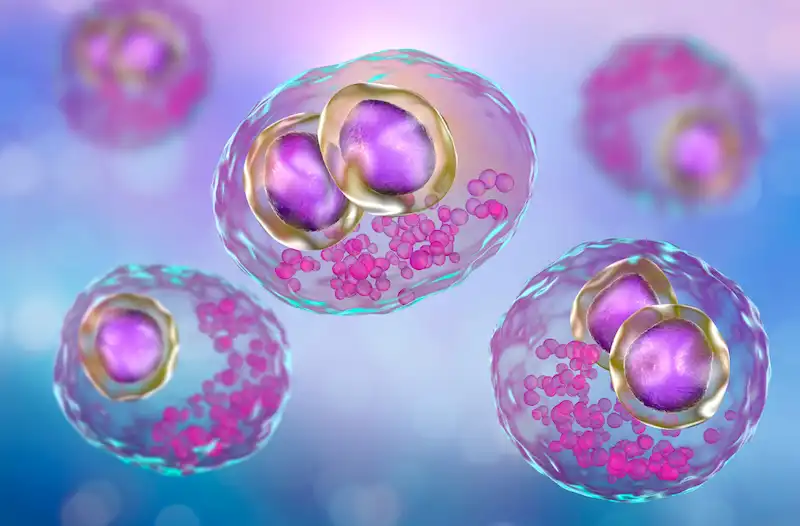
Cytomegalovirus
CMV in human cells.
Should You Choose a CMV-Positive or CMV-Negative Sperm Donor?
Choosing between a CMV-positive and CMV-negative sperm donor depends on your medical circumstances and preferences.
If your fertility clinic has no objection to using a donor with past CMV exposure, a CMV-positive donor may be an option worth considering.
This lets you evaluate a broader selection of donors based on other important factors, including medical history, genetic screening, physical characteristics, and personal preferences.
If you are CMV-negative or your clinic specifically requires a CMV-negative donor, you can narrow your search accordingly.
At Cryobank America, we understand that intended parents have different needs and priorities.
That’s why our donor catalog includes both CMV-positive and CMV-negative donors, with a CMV filter to help simplify your search.
Explore CMV-Positive and CMV-Negative Sperm Donors
Frequently Asked Questions About CMV-Positive Sperm Donors
Is it bad if a sperm donor is CMV-positive?
Not necessarily. A positive CMV IgG antibody result generally indicates previous exposure to a common virus. It does not automatically mean the donor has a recent infection or is ineligible to donate.
Why are so many sperm donors CMV-positive?
CMV is extremely common among adults. Since more than half of U.S. adults have been infected by age 40, it is not unusual for otherwise healthy sperm donors to have detectable CMV antibodies.
Does CMV-positive mean the donor currently has CMV?
CMV remains in the body for life after infection. However, a positive IgG result alone does not establish active infection. Additional testing and medical review may be needed to assess recent infection or other concerns.
Can I get CMV from donor sperm?
CMV transmission through donor sperm is a potential concern, and the risk cannot be considered zero. Appropriate donor screening and clinic-specific selection policies help manage this risk.
Does CMV affect sperm quality?
A positive CMV antibody result does not, by itself, indicate poor sperm quality. Sperm quality is evaluated through semen analysis and other laboratory criteria.
Can I use a CMV-positive sperm donor if I am CMV-negative?
Some fertility clinics may allow this after individualized counseling, while others recommend or require CMV-negative donors. Consult your fertility specialist before choosing a donor.
Is a CMV-negative sperm donor safer?
A CMV-negative donor may be preferred for a recipient without prior CMV exposure because it avoids selecting a donor with known CMV antibody positivity. However, a negative antibody result does not guarantee that all infection risks are absent.
Does Cryobank America have CMV-negative sperm donors?
Yes. Cryobank America offers both CMV-positive and CMV-negative donors. Use the CMV filter in our donor search to find donors that match your preferences or clinic requirements.
Finding the Right Sperm Donor at Cryobank America
A CMV-positive result should not automatically cause you to eliminate an otherwise qualified sperm donor from consideration.
CMV is common, and many healthy adults have antibodies from a previous infection.
At Cryobank America, many of our qualified donors are CMV-positive, and we also offer CMV-negative donors for recipients who prefer or need them.
Understanding the difference between past CMV exposure and findings that suggest a recent infection can help you choose a donor with greater confidence.
Before making your final choice, discuss your CMV status and your selected donor’s results with your fertility clinic.
Ready to find a donor who meets your needs?
Search Sperm Donors at Cryobank America
For questions about donor CMV screening, contact Cryobank America at info@cryobankamerica.com or 817-945-8708.
Medical disclaimer: This article provides general educational information and does not replace individualized medical advice. Donor CMV eligibility and recipient compatibility should be reviewed with a qualified fertility healthcare provider.